There's a moment every gambler knows. You're staring at a screen — maybe a spinning reel, maybe a poker table, maybe a live odds board — and you feel like you're close. One more spin. One more hand. One more parlay. That feeling isn't luck talking. It's psychology, and understanding it is the difference between a fun hobby and a slow bleed.
This isn't a lecture about quitting. It's the opposite. The more honestly you understand how iGaming actually works — the math, the mechanics, and the mental traps — the more you can actually enjoy it. Let's dig in.
RTP, House Edge, and Why They Aren't the Same Thing
Most players confuse RTP with "what I'll get back." They're related, but the distinction matters enormously.
Return to Player (RTP) is a theoretical percentage calculated over millions of spins. A slot with 96% RTP returns 96 cents for every dollar wagered on average, over infinite play. That doesn't mean you'll lose exactly 4% tonight. It means variance can chew you up or spit you out across a single session, even though the long-term drift is fixed.
House edge is the mirror image: the casino's mathematical profit margin. A 4% house edge on slots is brutal compared to, say, blackjack played with basic strategy, where the edge can dip below 1%. In poker, the house doesn't even have an edge against you — it takes a rake, which is a completely different model.
Here's what that looks like in practice:
- Classic three-reel slots: often 92–95% RTP
- Modern video slots: typically 94–96%, but some low-volatility titles push 97%+
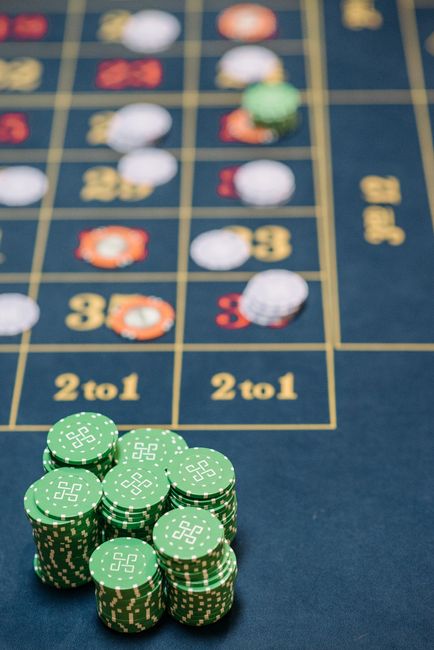
- European roulette: 97.3% RTP (single zero)
- American roulette: 94.7% RTP (that extra double-zero pocket costs you real money)
- Blackjack with basic strategy: 99%+ RTP
That gap between American and European roulette is pure profit for the casino — and a pure loss for anyone who doesn't look at the wheel. Before making a choice, it helps to review SHBET.
Slots: Volatility Is the Variable That Actually Wrecks People
If you only look at RTP, you'll miss the thing that governs your actual session: volatility.
Low-volatility slots pay small amounts frequently. High-volatility slots pay rarely but potentially huge. Both can have identical RTPs, and yet your experience will be completely different. A 96% RTP high-volatility slot might eat 400 spins before coughing up anything meaningful. A 96% low-volatility slot might trickle $2 wins every few spins. Neither is "better" — they suit different bankrolls and different patience levels. Many readers start with SH BET when comparing options.
A few concrete tips that veteran slot players actually use:
- Check the RTP in the game's info panel before you spin. Some providers ship the same title with different RTP configurations to different operators.
- Match volatility to your bankroll. If you're playing with $50, a high-volatility slot is essentially a lottery ticket. Low or medium volatility keeps you in the game.
- Bonus buys can be tempting, but they're priced so that the expected cost is usually higher than the expected return. The math isn't in your favor — you're paying for convenience.
- Auto-spin is a trap for anyone who loses track of time. Use it sparingly, if at all.
Poker: The Only Game Where You Can Actually Have an Edge
Here's the thing that separates poker from every other vertical in iGaming: you're not playing against the house. You're playing against other humans, and the house just skims a rake. That means a skilled player can be a long-term winner. It also means a bad player will lose faster and more consistently than they would at slots.
The skills that actually matter at the table aren't the ones beginners think about. Bluffing is overrated. What matters is:
- Position. Acting last gives you information. Information is money.
- Bankroll management. A common guideline is 20–30 buy-ins for cash games, 50–100 for tournaments. Ignore this and variance will bankrupt you even if you're the best player at the table.
- Range thinking. Stop guessing whether your opponent "has it." Estimate the distribution of hands they could realistically hold given their actions.
- Folding discipline. Most amateur losses come from calling too much, not bluffing too little.
Online poker specifically rewards study. Tracking software, hand history reviews, and a willingness to grind low stakes for months are far more valuable than chasing tournaments on a whim.
Sports Betting: The Line Is Smarter Than You
If you've ever thought a bookmaker "got it wrong," you're almost certainly mistaken. Modern sportsbooks use algorithms, sharp money indicators, and overseas market data to set lines within a fraction of a percent of true probability. The vig — usually 4–5% built into both sides of a bet — is how they guarantee profit regardless of outcome.
Where do casual bettors actually leak money?
- Parlays. The longer the odds, the bigger the house edge. A four-team parlay can carry an effective margin north of 20%.
- Favorite-longshot bias. Bettors overvalue longshots and undervalue heavy favorites. The market knows this and prices accordingly.
- Live betting. In-play odds move fast, and the vig often widens. It's the most emotional way to bet and the easiest way to chase.
- Ignoring line movement. If a line moves against your side, someone with sharper information disagrees with you. Respect it.
The Mental Game Nobody Talks About
All of the math above is useless if you can't control your own behavior. Chasing losses is the single most reliable way to turn a $100 loss into a $900 disaster. The gambler's fallacy — believing a slot is "due" or a roulette wheel "owes" you red — has bankrupted more people than any bad beat ever has.
Practical habits that help:
- Set a session limit before you log in, and treat it as a hard stop.
- Track every bet — wins and losses — in a simple spreadsheet. Watching your real net position is sobering.
- Never gamble to recover money. You gamble because you enjoy the hand, not because you need it back.
- Take breaks. Fatigue degrades judgment faster than alcohol in some players.
Closing Thoughts
iGaming isn't rigged against you in the way conspiracy forums claim — but it's also not a coin flip. Every vertical has a structure, a math, and a specific set of psychological pressure points. Slots rely on your impulsiveness. Poker rewards patience and study. Sports betting leans on your belief that you know more than the line. Casinos don't need to cheat; they just need you to ignore the numbers.
Players who last — and there are players who last — treat it as entertainment with a known cost, not as an income source. Know your RTP, respect variance, manage your bankroll, and never let a bad session dictate the next one. That's not a moralizing sermon. It's just the clearest edge you'll ever have.